SPF, DKIM, and DMARC Explained: Why Verifying Your Email Records Actually Matters
If you’ve ever set up an email marketing tool, you’ve probably run into three intimidating acronyms — SPF, DKIM, and DMARC — and a request to “verify your sending domain.” It’s tempting to skip it. It sounds technical, it lives in DNS settings most people never touch, and your emails seem to send fine without it.
But here’s the truth: these three records are quietly one of the most important things standing between your campaigns and the inbox. Skip them, and even your best-written emails can land in spam — or worse, scammers can impersonate your brand. Set them up once, and you protect your deliverability and your reputation for good.
This guide explains what each one actually does, in plain language, with no jargon required.
In this guide
- The problem these records solve
- What “email authentication” really means
- SPF: the guest list of approved senders
- DKIM: the tamper-proof seal
- DMARC: the rulebook and the reports
- How the three work together
- Why this matters more than ever in 2026
- What happens if you don’t verify
- The good news: it’s a one-time setup
The problem these records solve
Email was invented decades ago, in a more trusting era. By default, anyone can put any name in the “From” field of an email — there’s nothing built into email itself that proves a message really came from who it says it did.
That’s a huge problem. It’s exactly how scammers send phishing emails that look like they’re from your bank, a delivery company… or your store. And because inbox providers like Gmail and Outlook know this, they’re deeply suspicious of any email that can’t prove who sent it. When they can’t verify you, they protect their users by sending your email to spam — or rejecting it entirely.
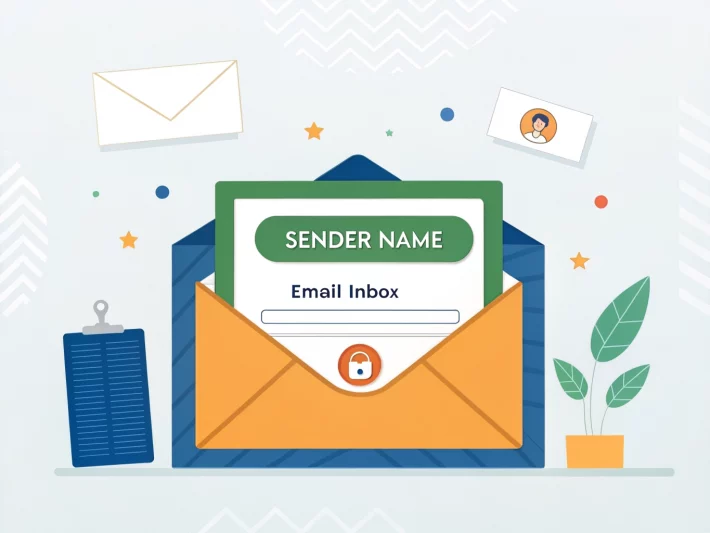
SPF, DKIM, and DMARC are the three tools that let you prove your emails are genuinely from you. Think of them as the ID documents your email shows at the border before it’s allowed into someone’s inbox.
What “email authentication” really means
“Authentication” just means proving identity. When you verify your domain, you’re publishing a few small records in your domain’s DNS settings (the internet’s address book for your domain). These records act as public proof that you’ve authorized certain services — like your email marketing platform — to send email on your behalf.
Every time you send a campaign, the receiving mail server quietly checks these records in the background, in a fraction of a second, before deciding where to put your message. Let’s look at what each one checks.
SPF: the guest list of approved senders
SPF stands for Sender Policy Framework. In plain terms, it’s a guest list of who is allowed to send email using your domain.
Imagine your company has a front desk, and you hand the receptionist a list: “These are the only couriers allowed to send packages in our company’s name.” When a package goes out, the receptionist checks the list. If the courier isn’t on it, something’s wrong.
SPF works the same way. You publish a record that says, in effect, “These specific servers are authorized to send email for my domain.” When your email arrives, the receiving server checks: did this message come from a server on the approved list? If yes, it passes. If a stranger tries to send email pretending to be you from an unauthorized server, SPF flags it.
DKIM: the tamper-proof seal
DKIM stands for DomainKeys Identified Mail. It does two things at once: it proves the email genuinely came from your domain, and it proves nobody tampered with the message in transit.
Picture an old-fashioned letter sealed with wax and stamped with a unique signet ring. When the letter arrives, the recipient can see the seal is unbroken and recognizes the stamp — so they know it’s authentic and hasn’t been opened or altered along the way.
DKIM is the digital version of that wax seal. Every email you send gets an invisible cryptographic “signature” attached to it. The receiving server checks that signature against a public key stored in your DNS. If the signature matches and the seal is intact, the server knows the message is genuinely yours and arrived exactly as you sent it. If someone intercepted and changed the email, the seal breaks and the check fails.
DMARC: the rulebook and the reports
DMARC stands for Domain-based Message Authentication, Reporting & Conformance. Don’t let the long name scare you — its job is simple. DMARC ties SPF and DKIM together and answers one question: “What should a mail server do if an email claiming to be from me fails these checks?”
Going back to our front desk: DMARC is the official company policy posted on the wall. It says something like, “If a package arrives in our name that isn’t on the approved list and doesn’t carry our seal, here’s what to do with it — and please send me a report of anyone who tried.”
You get to choose how strict that policy is:
- Monitor only — let suspicious mail through for now, but report it to me. (This is the gentle starting point, written as
p=none.) - Quarantine — send suspicious mail to the spam folder.
- Reject — block suspicious mail entirely.
The bonus feature of DMARC is the reports. It tells you who is sending email using your domain — including any scammers trying to impersonate you. That visibility alone is a powerful way to protect your brand.
How the three work together
None of these records does the whole job alone — together they form a complete identity check:
- SPF confirms the email came from an authorized server.
- DKIM confirms the email is genuine and unaltered.
- DMARC decides what to do when something doesn’t add up — and reports back to you.
When all three are in place and verified, inbox providers see your email as trustworthy. That trust is what earns you a spot in the inbox instead of the spam folder.
Why this matters more than ever in 2026
This used to be optional best practice. It isn’t anymore. The largest inbox providers have made email authentication mandatory:
- Gmail and Yahoo began requiring SPF, DKIM, and DMARC for bulk senders in February 2024 — and as of late 2025, non-compliant emails can be delayed or rejected outright.
- Microsoft (Outlook, Hotmail, Live) joined with its own enforcement starting in May 2025.
- Apple Mail has similar expectations.
The practical bottom line: if you send marketing emails at any meaningful volume and your domain isn’t authenticated, a growing share of your messages simply won’t reach your customers. Verifying your records isn’t a “nice to have” — it’s the entry ticket to the inbox.
What happens if you don’t verify
Skipping authentication doesn’t cause an obvious error — and that’s exactly why it’s dangerous. Instead, you quietly suffer:
- Lower deliverability. More of your emails land in spam or get rejected, often without you realizing it.
- Damaged sender reputation. Unverified mail looks suspicious, which drags down trust in your domain over time.
- Brand and security risk. Without DMARC, scammers can impersonate your domain to phish your own customers — and you’d never even know.
- Wasted spend. Every campaign that doesn’t reach the inbox is marketing budget and effort thrown away.
The good news: it’s a one-time setup
Here’s the reassuring part. Even though SPF, DKIM, and DMARC sound complex, verifying your domain is usually a one-time setup that takes just a few minutes. You add a handful of records to your domain’s DNS settings, confirm them, and you’re protected from then on. You don’t need to be a developer, and you won’t need to touch it again under normal circumstances.
We’ve put together a clear, step-by-step walkthrough that shows you exactly which records to add and where, with screenshots for the most common domain providers.
👉 Follow our step-by-step guide to verify your sending domain →
Once your domain is verified, your emails carry full credentials to every inbox — and you can focus on what actually grows your store: great campaigns that your customers actually receive.
Suggested SEO meta description (under 160 characters): SPF, DKIM, and DMARC explained in plain English — what they mean, why verifying your domain matters, and how to set them up to keep emails out of spam.